The distinction in separation of powers vs checks and balances is between assigning a job and defining who can intervene in it. Separation of powers gives different institutions different public functions. Checks and balances give those institutions specific ways to affect one another’s decisions, such as returning a bill or reviewing an action after a challenge.
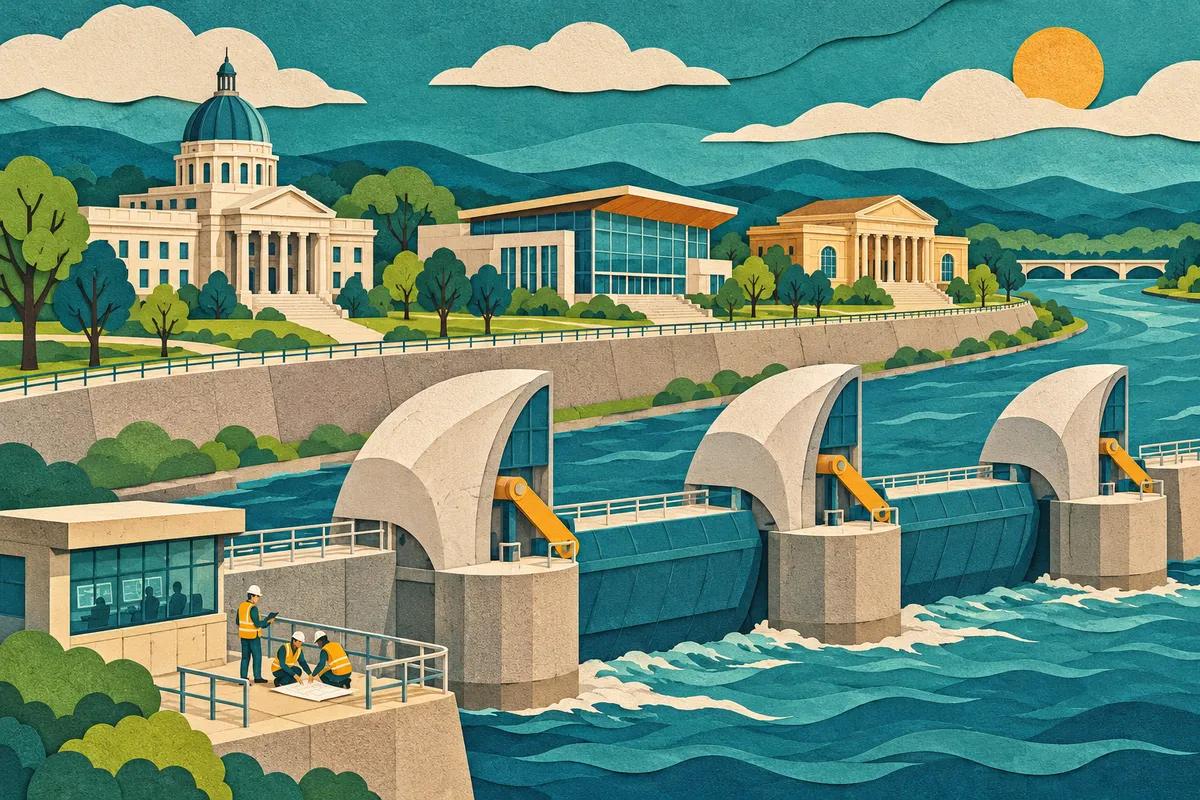
Imagine a national assembly voting to fund a barrier that will protect a town from flooding. The assembly sets the spending and safety rules. The executive selects the project and carries out the work. A court may hear a challenge about whether an action complied with those rules. The same project lets us see both the division of work and the points where one institution may act on a decision by another.
Separation of powers vs checks and balances in practice
The legislature, executive and judiciary have different responsibilities in this example. That starting point helps you predict where a decision belongs. A vote to authorize spending is a legislative act. Scheduling an inspection before the work starts is an administrative act. Resolving a dispute over whether the required inspection took place is a judicial act if it comes before a court with authority to hear it.
The names of the branches give a useful outline. To understand the arrangement, trace a specific decision. Who initiates it? What conditions must that institution meet? If somebody disagrees, is there a route for review, and what can the reviewing institution actually do? Those questions reveal more about the system than an organization chart alone.
Follow the flood barrier bill
In this fictional country, the assembly passes a bill setting aside money and requiring a safety assessment before construction. Once the law is in force, the executive selects a project and organizes the work. A challenge comes later if someone argues that the agency approved construction without the required assessment.
| Stage | Institution | Decision |
|---|---|---|
| Pass the funding bill | Legislature | Set the spending and safety rules |
| Carry out the project | Executive | Select the project and organize construction |
| Hear a challenge | Court | Decide whether the disputed action complied with the applicable rules |
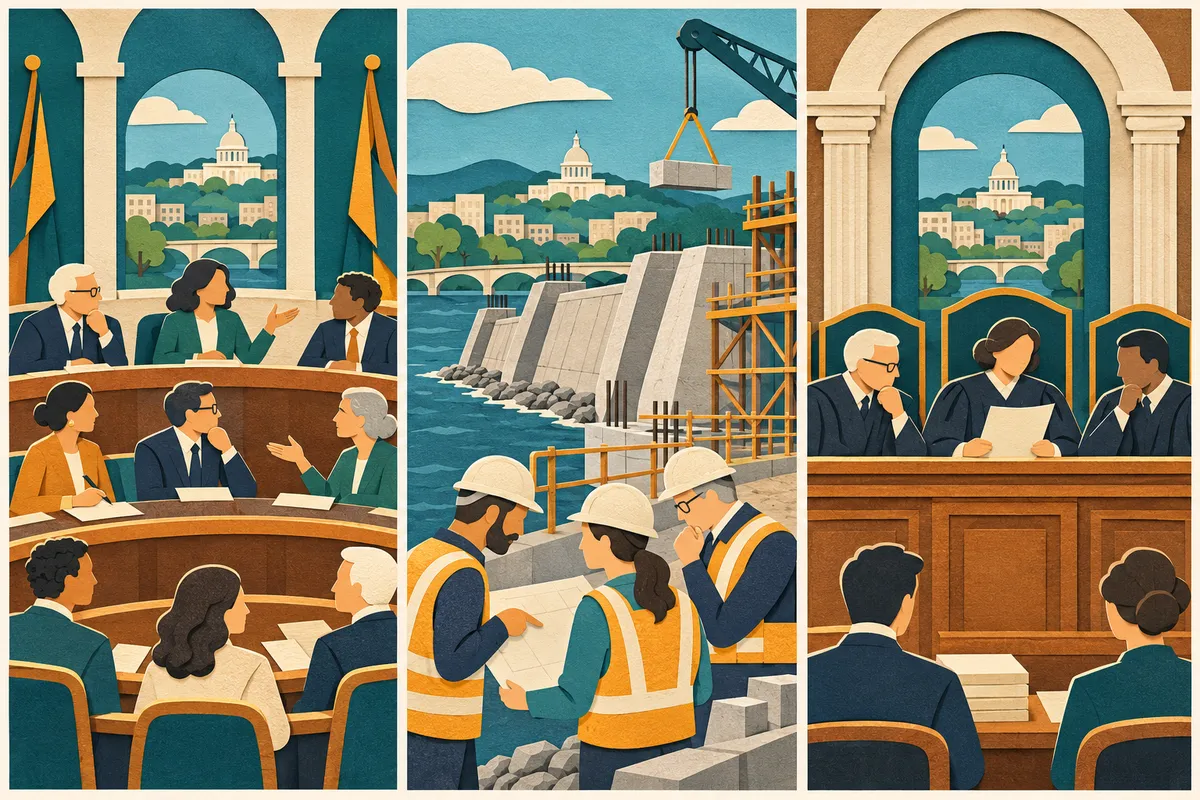
Concept illustration. The setting and its institutional rules are fictional.
The executive may need to make dozens of decisions the assembly could not settle in a bill. For example, engineers might present two designs that both meet the safety requirements. The agency can choose between them under the authority it has been given. Its discretion is easier to understand once the legislature’s general rule and the agency’s implementation choices are visible as separate steps.
Where a check changes the next step
Suppose the fictional rules allow the executive to return the bill with objections before it takes effect. The executive can ask the assembly to clarify who will pay for the safety assessment. The assembly then reconsiders the text under its own procedure. The point of calling this a check is that the return changes what must happen next. The original responsibility to legislate still belongs to the assembly.
A real example of these distinct functions appears in the National Archives transcript of the U.S. Constitution. Articles I through III allocate legislative, executive and judicial powers. Article I, Section 7 describes presenting bills to the president and returning a bill with objections for reconsideration. The imaginary country in this guide has its own rules.
What judicial review covers in the example
Suppose someone challenges the agency’s authorization to begin work. The court might ask whether the agency had authority to approve it and whether it complied with the assessment requirement. If the procedure was incomplete, the available response depends on the court’s powers. That question is different from deciding which engineering plan is cheapest or most durable.
Someone reading about the dispute should look for the precise action under challenge. Reviewing the approval of a project, interpreting the funding law and designing a barrier are different tasks. A useful account explains who performed each task and what the review changed. That makes it possible to distinguish a check with a practical consequence from a statement of disagreement.
How this differs from federalism
Federalism asks how power is divided between territorial levels. The flood barrier might be a national project, a provincial project or an arrangement involving both. After identifying the level responsible, you can still ask which institution authorizes spending, which agency carries out the project, and what review is available.
On the 12 Axes guide, Structure describes territorial distribution of power, while Representation covers how political decisions are made. The methodology explains how responses across topics form a profile. To apply these ideas before you take the political test, pick one decision in the flood barrier example and name the institution responsible, the possible check and the rule that defines its reach.