Personality tests
Introvert extrovert test: where do you fall on the scale?
This free introvert extrovert test shows where you sit between introversion and extroversion, including the wide middle ground often called ambiversion. You rate 24 short statements about energy, company, noise, thinking and rest, then get a score from 0 to 100% and one of five results, from Introvert to Extrovert. There is no sign-up, and your answers stay in your browser.
- Statements
- 24
- Types
- 5
- Minutes
- 3

01
What this introvert extrovert test measures
Introversion and extroversion describe how you respond to people, activity and stimulation. Extroverts tend to gain energy from company, conversation and busy surroundings. Introverts tend to prefer quieter settings, fewer people at a time and more room for their own thoughts. This introvert extrovert test treats the two as ends of one scale rather than two boxes, so your result shows how far you lean, not just which way.
The 24 statements cover five everyday areas: where your energy comes from, the kind of company you prefer, how much noise and activity you enjoy, whether you think out loud or inside your head, and how long you need to recover after a social stretch. Half of the statements describe extroverted habits and half describe introverted ones, and both ends are written to sound equally reasonable.
02
Where the idea of introverts and extroverts comes from
The Swiss psychiatrist Carl Jung brought the terms into psychology in his 1921 book Psychological Types. He described introverts as turned mainly toward their inner world of thoughts and feelings, and extraverts toward the outer world of people and things. Jung spelled it extravert, as most psychologists still do; extrovert became the everyday spelling. He also held that everyone has both tendencies, with one usually in the lead.
In the 1960s the British psychologist Hans Eysenck proposed a biological explanation. He suggested that introverts run at a higher baseline level of brain arousal, so extra noise and company push them past their comfort point sooner, while extroverts seek more stimulation to feel at their best. Later research has supported parts of this idea and questioned others, but it still shapes how people talk about the difference.
Today extroversion is one of the five broad traits in the Big Five model, the framework most used in personality research. There it is measured as a continuous trait that covers sociability, assertiveness, activity level and a tendency toward upbeat emotions. Researchers generally find that most people score somewhere in the middle rather than at either end, which is why an introvert extrovert test needs more than two possible answers.
03
Introvert, extrovert or ambivert?
Ambivert is a popular word for someone near the middle of the scale, who enjoys company and solitude in roughly equal measure. The word dates back to the early twentieth century, but researchers rarely treat ambiverts as a separate type; in trait research the middle is simply part of the same continuum. This introvert extrovert test uses the term because it gives a clear name to a very common result.
Being an ambivert does not mean you have no preference. It usually means your preference depends more on the situation: you may be lively at a small dinner with friends and quiet at a conference full of strangers. Two leaning results, Introverted ambivert and Extroverted ambivert, describe people who sit near the middle but still tilt clearly one way.
04
How the introvert extrovert test is scored
For each statement you choose Strongly agree, Agree, Neutral or unsure, Disagree or Strongly disagree. Agreeing with an extroverted statement raises your score and agreeing with an introverted one lowers it; Strongly agree counts fully and Agree counts half. The statements appear in a mixed order, so there is no need to keep track of which is which while you answer.
Your result is shown as 0 to 100%, the share of the scale's maximum. 0% means every answer pointed fully toward introversion, 100% fully toward extroversion and 50% exactly between. These are not percentiles: 65% means your answers sat about two thirds of the way toward the extrovert end, not that you outscored 65% of people. The test has no population norms.
Your score then places you in one of five bands: Introvert below 30%, Introverted ambivert from 30 to 44%, Ambivert from 45 to 54%, Extroverted ambivert from 55 to 69% and Extrovert from 70% up. The cut points are this site's own choices, not official boundaries, so if you land close to one, read the descriptions on both sides of it.
05
How to read your introvert extrovert test result
Start with the band, then look at the number. A score of 31% and a score of 44% share a band but describe noticeably different people, so the exact percentage matters. Then think back to the statements you answered most strongly. They often show which part of the trait drives your result, such as a strong need for recovery time or a love of thinking out loud.
Neither end is better. Introverts are often good at focus, listening and careful thought; extroverts at energy, quick connection and keeping a group moving. Each style has costs too, such as overthinking or talking before listening. Your introvert extrovert test result is most useful as a guide for planning: how much company, quiet and recovery time you need in a week to feel like yourself.
06
Introversion, shyness and other personality tests
Introversion is often confused with shyness, but they are different things. Shyness is discomfort or worry about how others will judge you, and it can affect introverts and extroverts alike. Introversion is a preference for less stimulation and more time alone. A confident introvert may give a great talk and then want a quiet evening; a shy extrovert may long for company but feel nervous joining in.
If you want a wider view, the Big Five personality test measures extroversion alongside four other broad traits, and the 16 personality test uses introversion versus extroversion as the first of its four preferences. This introvert extrovert test gives you a focused look at one trait in more detail; the broader tests show how it combines with the rest of your personality.
What the Introvert Extrovert Test measures
Extroversion
How much you draw energy from people, activity and stimulation, as opposed to quiet, solitude and your own thoughts. A higher score means a stronger lean toward extroversion.
High. You lean toward extroversion. People and activity energize you, you often think out loud, and long stretches alone can leave you restless.
Low. You lean toward introversion. You recharge alone, prefer calm settings and small groups, and often think things through before you speak.
The five bands

Introvert
0–29%
Your answers lean clearly toward introversion. You likely do your best thinking alone, prefer one or two close people to a crowd, and find that noise and back-to-back plans wear you down sooner than they seem to wear down others. Quiet is not something missing from your life; it is where you recharge and do your best work. The risk is that settings which reward speaking first may overlook what you have to offer unless you choose moments to share it.

Introverted ambivert
30–44%
You sit near the middle of the scale but lean toward the introvert side. You enjoy people, often more than you expect to, and you can be lively in the right company. Still, quiet time is what refills you, and after a busy stretch you need it more than an extrovert would. You probably prefer small groups and planned get-togethers to surprise invitations. Your flexibility is a real strength, as long as you protect your recovery time.
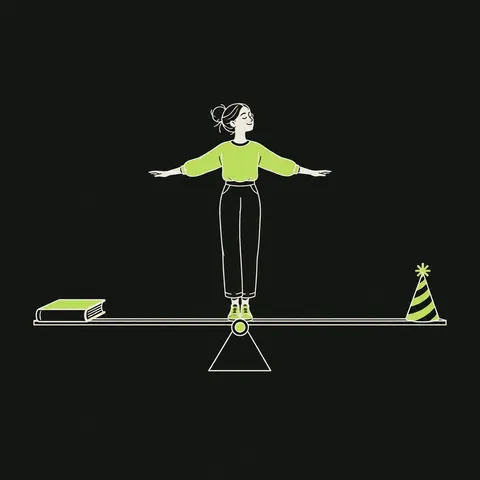
Ambivert
45–54%
Your answers sit close to the middle of the scale. Company and solitude both appeal to you, and which one you want depends heavily on the day, the people and the setting. You can lead a meeting in the morning and happily spend the evening alone. This flexibility helps you adapt to very different situations. The challenge is that your needs shift, so it pays to check in with yourself rather than assume you know what will recharge you.

Extroverted ambivert
55–69%
You sit near the middle of the scale but lean toward the extrovert side. People and activity usually give you energy, and you are often the one who suggests getting together. Yet you also value some quiet and can enjoy an evening alone, especially after a demanding week. You can read a room and switch between talking and listening. Watch that a full calendar does not quietly crowd out the rest you also need.

Extrovert
70–100%
Your answers lean clearly toward extroversion. You likely gain energy from people, conversation and busy places, think best by talking things through and grow restless after long stretches alone. You often bring momentum to a group, start conversations easily and enjoy being where the action is. Long periods of quiet can feel flat rather than restful. The risk is filling every silence, so quieter people around you may need a deliberate pause to join in.
Introvert Extrovert Test: frequently asked questions
Is this introvert extrovert test free?
Yes. It is free, with no account and no email address. Your answers are scored in your browser and never sent to a server, so nobody else sees them unless you share your result. If you would like more depth, a detailed PDF report is available for each result.
How long does the introvert extrovert test take?
There are 24 short statements, and most people finish in three to five minutes. Answer as you usually are across most of your life, not how you act on one unusual day or how you think you should be. Neutral is fine when a statement really doesn't apply to you.
What is an ambivert?
Ambivert is a popular term for someone who sits near the middle of the introversion and extroversion scale and enjoys both company and solitude. It is not a formal category in personality research, where the middle is simply part of the continuum. On this test, scores from 45 to 54% are labeled Ambivert, with a leaning band on each side.
Is my introvert extrovert test score a percentile?
No. Your score shows where your own answers fall between the lowest and highest possible totals, from 0 to 100%. A percentile would compare you with a reference group, and this test does not use one. So 60% means your answers leaned somewhat toward extroversion, not that you outscored 60% of people.
Can my introvert extrovert test result change over time?
Somewhat. Extroversion is one of the more stable personality traits in adulthood, but it is not fixed. A new job, a relationship, a move or a stressful season can all shift how you answer, and your mood on the day matters too. Retaking the introvert extrovert test a few months apart and comparing results can be revealing.
Is introversion the same as shyness or social anxiety?
No. Introversion is a preference for quieter settings and time alone. Shyness is nervousness about being judged, and social anxiety is a more intense fear that can get in the way of daily life. They can overlap, but many introverts are socially confident. This test measures preference, not fear, so it cannot tell you whether you have social anxiety.
Can I use this test for a diagnosis or a hiring decision?
No. This is a free self-report test for self-reflection, not a clinical, diagnostic or hiring instrument. It can help you put words to your social needs and talk about them with friends, partners or colleagues. If you are struggling with anxiety, low mood or loneliness, a qualified professional is the right person to ask.
Is it better to be an introvert or an extrovert?
Neither. Each end of the scale brings typical strengths and typical costs, and people at every point on it build good careers and close relationships. What helps most is knowing your own needs, such as how much quiet you want after a busy week, and arranging your life so those needs are met.
More free tests
- Big Five50 statements · about 7 min
- 16 Types48 statements · about 7 min
- Enneagram54 statements · about 8 min
- DISC32 statements · about 5 min
- HEXACO60 statements · about 9 min
- Dark Triad27 statements · about 4 min
- Attachment style32 statements · about 5 min
- Love language30 statements · about 4 min
- Love styles30 statements · about 4 min
- Locus of control24 statements · about 3 min
- Reaction timePlays in your browser · about 1 min
- Typing testPlays in your browser · about 1 min
- Number memoryPlays in your browser · about 1 min
- Verbal memoryPlays in your browser · about 1 min
- Sequence memoryPlays in your browser · about 1 min
- Visual memoryPlays in your browser · about 1 min
- Chimp testPlays in your browser · about 1 min
- Aim trainerPlays in your browser · about 1 min
- 12 Axes36–288 statements · 12 axes · about 5–40 min
Statements: Original items written for this site, based on Jung's introversion and extraversion, Eysenck's arousal theory and Big Five Extraversion, © 12axestest.dev.
Introvert extrovert test: where do you fall on the scale?
Start the introvert extrovert test