Personality tests
Love Style Test: Which of the Six Love Styles Is Yours?
This free love style test scores you on the six love styles described by the sociologist John Alan Lee: Eros, Ludus, Storge, Pragma, Mania and Agape. You rate 30 short statements about how you fall for people, what you want from a partner and how you act once you care. Your result names your strongest love style and shows how the other five compare. It takes about five minutes, needs no sign-up, and your answers stay in your browser.
- Statements
- 30
- Types
- 6
- Minutes
- 4
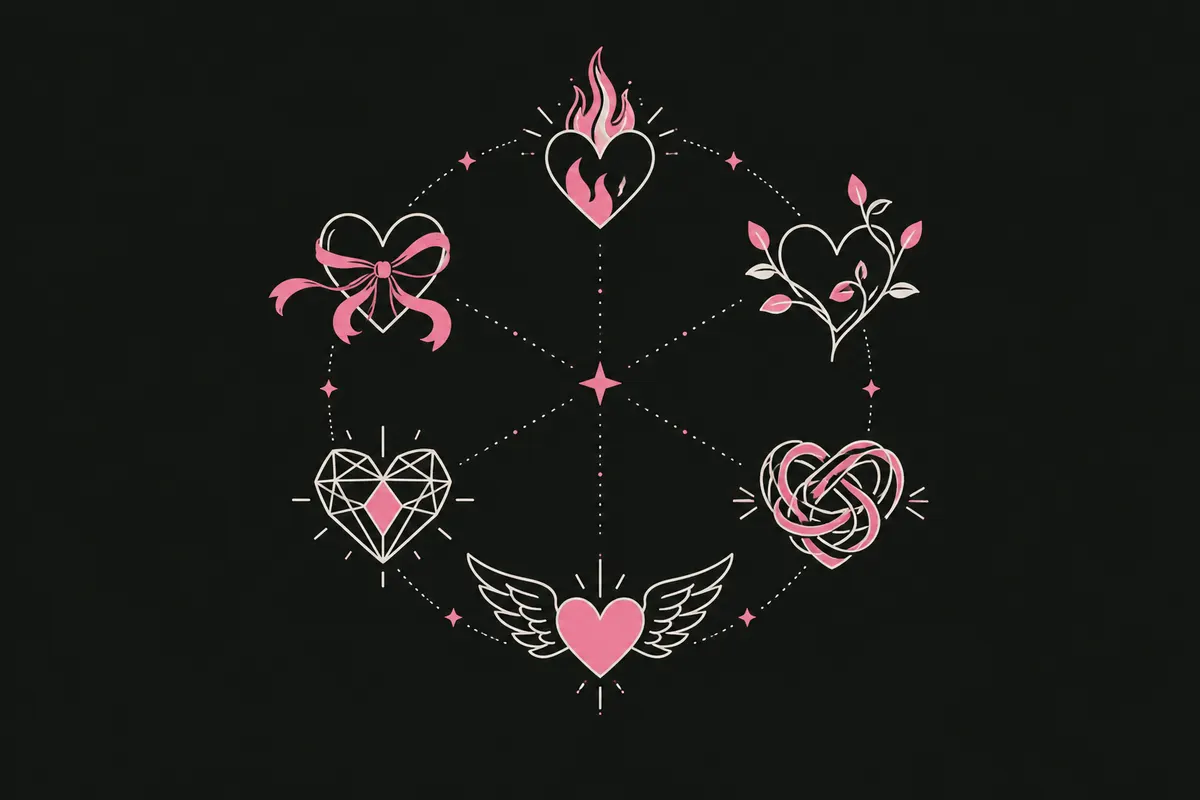
01
What the love style test measures
A love style is a pattern in how you approach romance: what draws you to someone, how fast you commit and what you expect love to feel like from day to day. This love style test does not ask whether you are in love or whether your relationship is healthy. It asks which ways of loving feel most natural to you, so you can see your habits clearly and talk about them.
The love style test has 30 statements, five for each of the six styles. Some describe the rush of attraction, others the comfort of a long friendship, careful planning, playful independence, anxious intensity or generous care. Agreeing with a statement raises the style it belongs to. You can answer about a current partner, a past relationship or how you usually are, whichever gives the most honest picture.
02
John Alan Lee and the colors of love
The six love styles come from John Alan Lee, a Canadian sociologist who set out his ideas in the 1973 book Colours of Love. Lee drew on interviews with adults about their love lives and on a long tradition of writing about love, and he borrowed Greek and Latin words to name the patterns he found. A love style test built on his model asks which of those patterns you lean toward.
Lee compared love to a color wheel. Eros, Ludus and Storge are his three primary styles. Mixing two of them gives the three secondary styles: Eros and Ludus make Mania, Ludus and Storge make Pragma, and Eros and Storge make Agape. Just as a painter mixes shades, Lee argued that most people blend several styles rather than fitting a single one, and that a person's mix can change from one relationship to the next.
In the 1980s the psychologists Clyde and Susan Hendrick turned Lee's ideas into a research questionnaire, and the six styles have been studied in many countries since. This love style test is independent of that work. Every statement here was written from scratch for this site, in everyday language, and the scoring is kept simple so you can see exactly how your result is built.
03
The six love styles at a glance
Eros is passionate love: strong attraction, fast emotional closeness and a clear idea of your type. Ludus is playful love: flirting, freedom and no rush to commit. Storge is friendship love: affection that grows slowly from shared time and trust. These three are Lee's primary colors, and many people recognize themselves in at least one of them straight away.
Pragma is practical love: choosing a partner whose goals, values and habits fit the life you want. Mania is anxious, possessive love: intense highs, painful lows and a deep need for reassurance. Agape is selfless love: patient, forgiving care that puts the other person's wellbeing first. None of the six love styles is right or wrong, and each one brings its own gifts and its own typical friction.
04
How the love style test scores your answers
Each statement uses a five-point scale from strongly agree to strongly disagree, and the statements appear in a mixed order. When you finish the love style test, each of the six styles gets a score from 0 to 100%. That number is the share of the maximum possible for that style, based on your five answers. It is not a percentile and does not compare you with other people.
Your highest score is your leading love style, and the result lists the other five beneath it. Because Lee saw love styles as blends, the gaps matter as much as the winner. A 75% Storge with a 70% Pragma reads very differently from a 75% Storge with everything else under 30%. If two styles tie, read both descriptions and treat yourself as a mix of the two.
05
How to read your love style test results
Start with your top style and ask whether it matches how you actually behave, not how you wish you behaved. Then look at your lowest score: it often explains what you find puzzling or tiring in partners. Someone high in Ludus and low in Mania may struggle to understand a partner who needs daily reassurance, and the reverse is just as true.
Your love style test results are most useful as a conversation starter. Ask a partner to take the love style test too, compare your top and bottom styles, and talk about one concrete situation where your styles clashed, such as texting habits or how quickly you each wanted to commit. Naming the pattern can take some of the blame out of an old argument.
06
Love styles, love languages and attachment styles
A love style test is easy to confuse with two other popular ideas. Love languages describe how you prefer to give and receive affection, such as through words or touch. Attachment styles, rooted in research on how infants bond with caregivers, describe how secure or anxious you feel about closeness. Lee's love styles sit in between: they describe what you believe love is and what you look for in it.
The ideas overlap in places. Researchers have often noted links between the Mania style and anxious attachment, for example. Still, each model asks its own question, and this site has an attachment style test and a love language test if you want to compare all three. For a broader view of your personality beyond romance, the Big Five personality test measures five general traits that shape relationships of every kind.
The 6 types
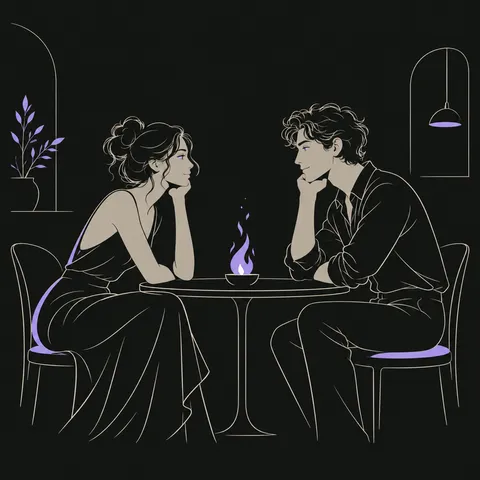
Eros: The Passionate Romantic
Eros lovers trust the spark. They tend to know quickly when someone draws them in, they open up early and they want love to feel vivid, close and physical. At their best they are warm, expressive and devoted: the partner who plans the surprise weekend and still says “I love you” like they mean it. The risk comes when the first intensity fades and everyday routine starts to feel like love dying. Growth often comes from learning that a quieter, deeper closeness is passion too.
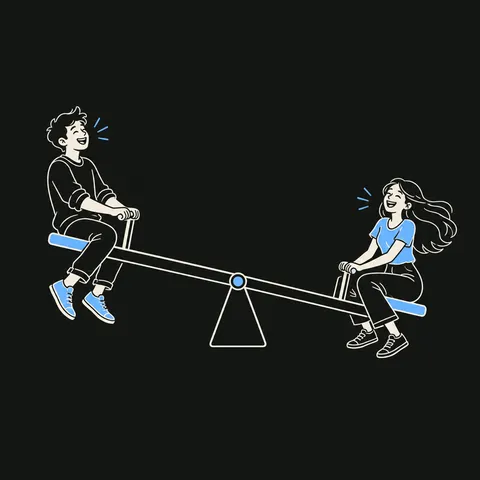
Ludus: The Playful Lover
Ludus lovers treat romance as something to enjoy. They are good at flirting, keep things light and protect their freedom, often dating for a while before deciding what they want. At their best they are fun, easygoing and refreshingly free of drama, and they rarely smother a partner. The risk is that partners who hope for commitment feel kept at arm's length or unsure where they stand. Growth often comes from being clear about your intentions, even when the honest answer is “I don't know yet.”

Storge: The Best-Friend Lover
Storge lovers fall slowly. Their strongest bonds often begin as friendship and deepen through shared time, inside jokes and steady trust, until romance feels like a natural next step rather than a leap. At their best they are loyal, calm and easy to be with: the partner who feels like home. The risk is that comfort slides into taking each other for granted, or that a partner who wants passion feels something is missing. Growth often comes from adding small, deliberate moments of romance to a friendship that already works.
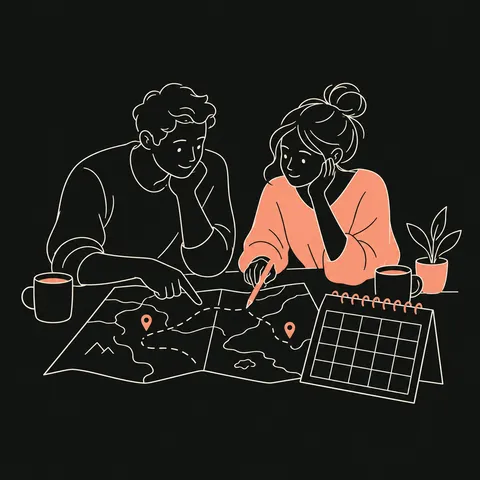
Pragma: The Practical Partner
Pragma lovers choose with care. They look for someone whose values, goals and daily habits fit the life they want, and they notice early how a person handles money, family and responsibility. At their best they are thoughtful, reliable and realistic, building relationships that hold up under real-life pressure. The risk is that a partner may feel assessed rather than adored, or that a good match on paper wins over a feeling that matters. Growth often comes from saying out loud why you love someone, not just why they fit.

Mania: The Devoted Worrier
Mania lovers feel everything strongly. When they fall for someone, that person fills their thoughts, and the relationship can lift or sink their mood within an hour. They tend to need reassurance, notice small signs of distance and feel jealousy sharply. At their best they are deeply devoted, attentive partners who never take love lightly. The risk is that anxiety drives checking, testing or clinging, which can push away the closeness they crave. Growth often comes from building a sense of security inside yourself, not only from your partner.

Agape: The Selfless Giver
Agape lovers lead with care. They find real joy in making life easier for the person they love, forgive quickly and give without keeping score. At their best they are patient, generous and steady: the partner people trust to show up in the hardest weeks. The risk is giving so much that their own needs disappear, or staying patient with a partner who does not give back. Growth often comes from treating your own wellbeing as part of the relationship, and from letting others care for you too.
Love Style Test: frequently asked questions
Is this love style test free?
Yes. The love style test is completely free, with no account, email or sign-up. Your answers are scored in your browser and are not sent anywhere, so nobody else sees how you responded. You can retake it whenever you like, for example after a new relationship begins.
How long does the love style test take?
There are 30 statements, and most people finish in about five minutes. Go with your first honest reaction rather than the answer that sounds most romantic or most sensible. If a statement does not apply to your life right now, think about how you usually behave in relationships.
Do I need to be in a relationship to take it?
No. You can answer about a current partner, your most important past relationship or your general approach to dating. Lee believed love styles can shift from one relationship to another, so if you are unsure, pick the relationship that shaped you most and answer with that one in mind.
Which love style is the best?
None. Each style brings real strengths: Eros brings warmth and excitement, Ludus lightness, Storge steadiness, Pragma good judgment, Mania deep devotion and Agape generosity. Each also has typical friction. Some combinations need more conversation than others, but how well two people get along depends far more on how they talk and adjust than on matching labels.
What if two styles score almost the same on my love style test?
That is common and fits Lee's idea that styles blend like colors. Close scores mean your answers do not clearly separate those styles. Read both descriptions and notice which one shows up when you feel most stressed or most in love, because that is often the style doing the steering.
How accurate is the love style test?
Researchers have studied Lee's six love styles for decades, but this love style test is a free self-report tool for self-reflection, not a clinical, diagnostic or counseling instrument. It cannot tell you whether a relationship will last. Your mood, your current relationship and how you read each statement all affect the result.
Can my love style change over time?
Yes. Lee saw love styles as ways of relating rather than fixed personality traits. A new partner, a painful breakup, more life experience or a shift in priorities can all change your mix. Retaking the test a year from now, or after a big change, is a simple way to see how your approach to love has moved.
What do I get when I finish?
You see your leading love style, a short description of it and your score on all six styles, which you can share as an image. If you want more depth, a detailed PDF report is available for your result, covering what you seek, what you give and how to talk with partners whose styles differ from yours.
Is a love style the same as a love language?
No. A love language describes the way you like to show and receive affection, such as gifts, time or kind words. A love style describes what you believe love is and how you approach it, from passionate to practical. Two people can share a love language and still have very different love styles.
More free tests
- Big Five50 statements · about 7 min
- 16 Types48 statements · about 7 min
- Enneagram54 statements · about 8 min
- DISC32 statements · about 5 min
- HEXACO60 statements · about 9 min
- Dark Triad27 statements · about 4 min
- Introvert or extrovert24 statements · about 3 min
- Attachment style32 statements · about 5 min
- Love language30 statements · about 4 min
- Locus of control24 statements · about 3 min
- Reaction timePlays in your browser · about 1 min
- Typing testPlays in your browser · about 1 min
- Number memoryPlays in your browser · about 1 min
- Verbal memoryPlays in your browser · about 1 min
- Sequence memoryPlays in your browser · about 1 min
- Visual memoryPlays in your browser · about 1 min
- Chimp testPlays in your browser · about 1 min
- Aim trainerPlays in your browser · about 1 min
- 12 Axes36–288 statements · 12 axes · about 5–40 min
Statements: Original items written for this site, based on John Alan Lee's six love styles, © 12axestest.dev.
Love Style Test: Which of the Six Love Styles Is Yours?
Start the love style test