Personality tests
Attachment Style Test: How Do You Handle Closeness?
This free attachment style test asks you to rate 32 short statements about your close relationships, with partners and close friends alike, and scores you on four adult attachment styles: secure, anxious, avoidant and fearful-avoidant. Your result names the style that scored highest and shows how close the other three came. It takes about five minutes, there is no account to create, and your answers never leave your browser.
- Statements
- 32
- Types
- 4
- Minutes
- 5

01
What the attachment style test measures
Attachment styles describe the patterns you bring to closeness: how easily you trust, what you do when someone you love feels distant, and how you handle needing other people. This test looks at four of those patterns in adults. It covers close relationships in general, so it applies to partners, close friends and anyone you lean on, not only to romance.
The 32 statements describe everyday moments, such as waiting for a reply, making up after an argument or being asked how you really feel. Each statement belongs to one style, and agreeing with it raises that style's score. At the end you see a score for all four styles, because most people recognize something of themselves in more than one.
02
The four adult attachment styles
Secure attachment means feeling at ease with both closeness and independence, and expecting problems to be workable. Anxious attachment means wanting a lot of closeness and staying alert to signs that it might slip away, which often leads to seeking reassurance. Avoidant attachment means relying mostly on yourself and stepping back when things get emotionally intense.
Fearful-avoidant attachment means wanting closeness and feeling wary of it at the same time, so you may move toward people and then pull away. None of these styles is a flaw in your character. Each one is a sensible strategy that grew out of earlier experiences, and each comes with real strengths as well as habits that can get in your way.
03
Where attachment theory comes from
The British psychiatrist John Bowlby developed attachment theory from the 1950s onward, arguing that a young child's bond with their caregivers shapes how safe the child feels exploring the world. The psychologist Mary Ainsworth put his ideas to the test by watching how infants reacted when a parent briefly left a room and came back, and described what became known as secure, anxious and avoidant patterns.
In 1987, the researchers Cindy Hazan and Phillip Shaver proposed that adult romantic relationships follow similar patterns. In 1991, Kim Bartholomew and Leonard Horowitz described four adult styles by combining two ideas: how you see yourself and how you see other people. This questionnaire uses that four-style picture, with original statements written for this site rather than items from any published questionnaire.
04
How the attachment style test scores your answers
Each statement uses a five-point scale from strongly agree to strongly disagree, and the statements appear in a mixed order. Every style has eight statements. Your score for each style runs from 0 to 100% and shows how strongly you agreed with that style's statements, as a share of the highest possible score. It is not a percentile, so it does not compare you with other people.
The style with the highest score becomes your result, and the other three are listed below it. The four scores are separate, so you can score high on two styles at once. A high secure score next to a moderate anxious score, for example, often describes someone who is steady most of the time but gets uneasy when a relationship feels uncertain.
When your top two scores are within a few points, the questionnaire cannot separate them cleanly. Read both descriptions and notice which one fits your most important relationship right now. Many people find that one style shows up with partners and another with friends or family, which is normal and worth knowing about yourself.
05
How to read your attachment style test results
Read your top style as a description of habits, not a verdict on who you are. Notice where it fits and where it doesn't, then think about a recent moment of closeness or conflict: did you reach out, wait, withdraw or swing between the two? Your attachment style test results are most useful when you connect them to real moments like that.
Attachment styles can also change. Researchers use the phrase earned security for adults who grew up with difficult relationships and later developed a steady, trusting way of relating, often through supportive partners, friendships or therapy. A low secure score today is not a life sentence. Repeated experiences of being heard, and of keeping your footing in conflict, tend to move people toward security over time.
06
Attachment style test vs other personality tests
An attachment style test looks at one specific part of life: how you behave when you need someone, or when someone needs you. Broad personality tests look at everything. The Big Five measures five general traits, such as how sociable or how emotionally steady you are, while sixteen-type tests sort people by preferences such as introversion or extraversion.
The two views work well together. Researchers often find that people who score high on Big Five neuroticism also report more attachment anxiety, but the link is far from complete, and plenty of calm people still pull away when a partner gets emotional. Taking this attachment style test next to the Big Five or the Enneagram helps you see which patterns are general and which appear only in close relationships.
The 4 types

Secure attachment style
People with a secure attachment style are generally comfortable being close to others and comfortable on their own. They tend to trust that the people they love mean well, so a slow reply or a bad mood doesn't set off alarms. They can say what they need, hear criticism without feeling the whole relationship is at risk and make up after an argument. Secure doesn't mean perfect: secure people still get hurt and still argue. They simply tend to recover faster and to treat problems as something two people can solve together.

Anxious attachment style
People with an anxious attachment style care deeply about their relationships and stay closely tuned to them. They notice small changes in tone, remember details and put real effort into staying connected. The other side is worry: a delayed reply or a distracted evening can feel like a sign of trouble, and reassurance helps only for a while. Under stress they may reach out again and again or try harder to please. Growth often comes from learning to calm their own alarm and to ask for what they need directly.

Avoidant attachment style
People with an avoidant attachment style value independence and handle a lot on their own. They are often calm in a crisis, capable and respectful of other people's space. Closeness can start to feel like pressure, though, especially when someone wants to talk about feelings or the relationship itself, and their first move is often to go quiet or get busy. Others may read this as not caring, when it is usually self-protection. Growth often comes from staying in the conversation a little longer than feels comfortable.
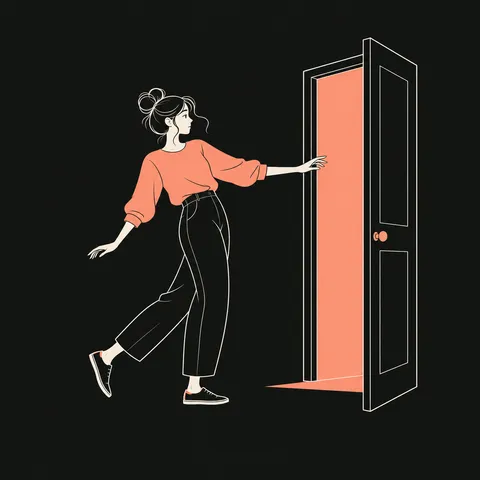
Fearful-avoidant attachment style
People with a fearful-avoidant attachment style want close relationships but find it hard to trust them. Part of them reaches for connection while another part expects to be let down, so they may open up warmly and then pull back, or feel both pulls at once. This style often grows out of relationships that were a source of both comfort and hurt. People with it are often perceptive and deeply loyal once trust forms. Growth often comes from slowing down, naming mixed feelings and letting trust build in small steps.
Attachment Style Test: frequently asked questions
Is this attachment style test free?
Yes. It is free, with no account, email or sign-up. Your answers are scored in your browser and are never sent anywhere, so nobody else sees how you responded. You can retake it whenever you like and compare your results over time.
How long does the attachment style test take?
The attachment style test has 32 statements, and most people finish in about five minutes. Go with your first honest reaction. If a statement fits one relationship but not another, answer for the relationships that matter most to you right now, or choose the middle option.
Is the attachment style test only about romantic relationships?
No. The statements are about close relationships in general: partners, close friends and anyone you depend on emotionally. Attachment research began with children and their caregivers, and many adults notice the same patterns with friends as with partners. If you are single, answer with your closest friendships and past relationships in mind.
What is the difference between anxious and fearful-avoidant?
Both styles involve worry about being hurt or left, but they respond differently. Anxious attachment tends to move toward people, seeking more contact and reassurance. Fearful-avoidant attachment wants closeness and also distrusts it, so it often moves toward someone and then pulls back. Some writers call the fearful-avoidant style disorganized, a term borrowed from research on infants.
Can my attachment style change?
Yes. Attachment styles are fairly stable patterns, but they are not fixed. Researchers describe adults who move toward security as having earned security, often after a steady relationship, close friendships or therapy. Your results can also shift with circumstances, such as a new relationship, a breakup or a stressful year.
How accurate is the attachment style test?
It is a free self-report questionnaire for self-reflection, not a clinical, diagnostic or hiring instrument. It reflects how you see yourself today, which can differ from how others see you. Treat your result as a starting point for reflection or conversation, and if relationship patterns cause you distress, a licensed therapist can help.
Is one attachment style better than the others?
Research often links secure attachment with more satisfying relationships, but no style makes you a better or worse person. Anxious people are often deeply attentive, avoidant people are often calm and capable on their own, and fearful-avoidant people often read emotional undercurrents well. Each style is an understandable response to past experience, and each can grow.
What do I get at the end of the attachment style test?
You get a free result page with your top style, scores for all four styles and a short description of each, plus images you can share. If you want more depth, a detailed PDF report is available for your result, covering what you need in relationships and how to repair after conflict.
Does this test use items from published attachment questionnaires?
No. Every statement was written for this site. Researchers use published questionnaires, such as the Experiences in Close Relationships scales, with their own wording and scoring. This test follows the same broad ideas with original statements, so its scores are not directly comparable with those instruments.
More free tests
- Big Five50 statements · about 7 min
- 16 Types48 statements · about 7 min
- Enneagram54 statements · about 8 min
- DISC32 statements · about 5 min
- HEXACO60 statements · about 9 min
- Dark Triad27 statements · about 4 min
- Introvert or extrovert24 statements · about 3 min
- Love language30 statements · about 4 min
- Love styles30 statements · about 4 min
- Locus of control24 statements · about 3 min
- Reaction timePlays in your browser · about 1 min
- Typing testPlays in your browser · about 1 min
- Number memoryPlays in your browser · about 1 min
- Verbal memoryPlays in your browser · about 1 min
- Sequence memoryPlays in your browser · about 1 min
- Visual memoryPlays in your browser · about 1 min
- Chimp testPlays in your browser · about 1 min
- Aim trainerPlays in your browser · about 1 min
- 12 Axes36–288 statements · 12 axes · about 5–40 min
Statements: Original items written for this site, based on adult attachment theory and the four-category model of Bartholomew and Horowitz, © 12axestest.dev.
Attachment Style Test: How Do You Handle Closeness?
Start the attachment style test