Personality tests
DISC Personality Test: Which of the Four Styles Is Yours?
This free DISC personality test asks you to rate 32 short statements about how you work, talk and make decisions, then scores you on all four DISC styles: Dominance, Influence, Steadiness and Conscientiousness. Your result names your primary style and shows how close the other three came. It takes about five minutes, there is no account to create, and your answers never leave your browser.
- Statements
- 32
- Types
- 4
- Minutes
- 5
01
What the DISC personality test measures
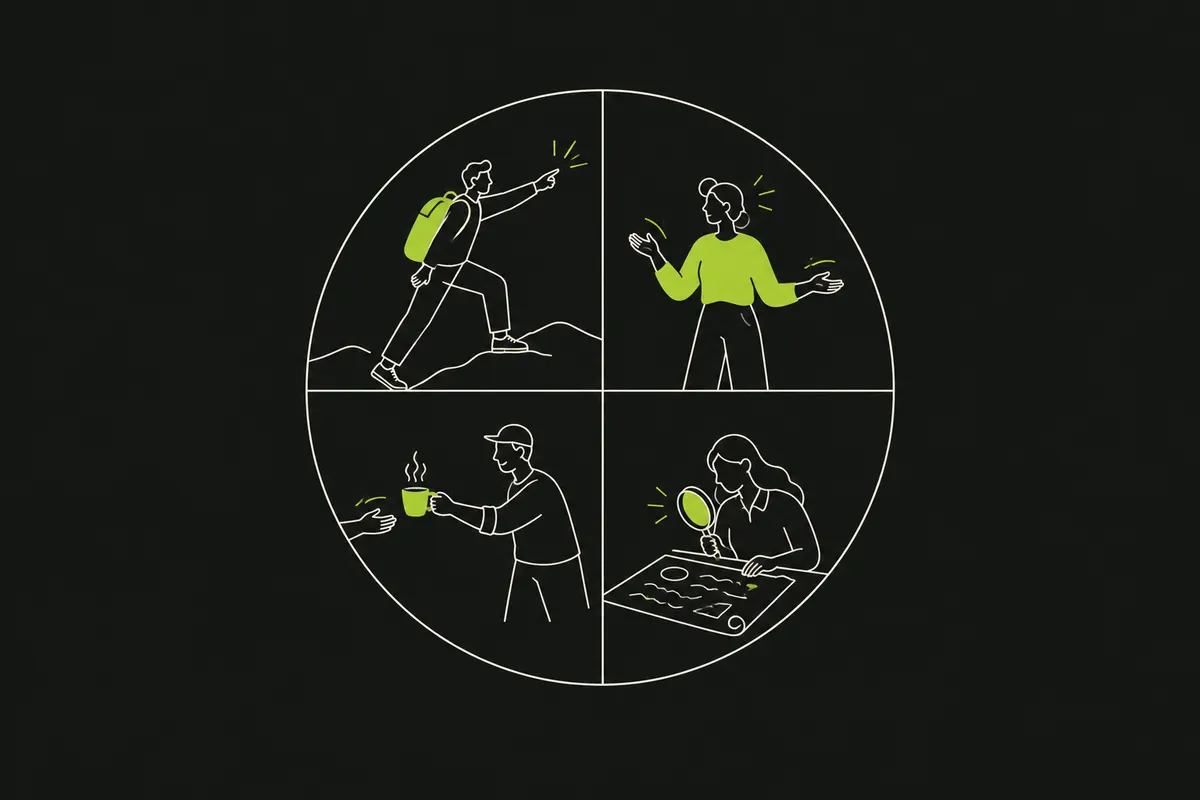
DISC describes four styles of everyday behavior: Dominance, Influence, Steadiness and Conscientiousness. The DISC personality test looks at how you tend to act rather than why: how fast you move, how directly you speak, whether you focus first on the task or on the people, and how you respond to rules, pressure and change. Everyone uses all four styles, but most people lean on one or two.
A simple way to picture the model is two crossing lines. One runs from fast-paced and outspoken to steady and reserved; the other runs from task-focused to people-focused. Dominance is fast and task-focused, Influence is fast and people-focused, Steadiness is steady and people-focused, and Conscientiousness is steady and task-focused. Your DISC personality test result shows where your habits cluster on that map.
02
Where the DISC model comes from
The four DISC styles go back to William Moulton Marston, an American psychologist who described them in his 1928 book Emotions of Normal People. As the title suggests, Marston was interested in ordinary, healthy people rather than illness. He argued that people respond to their surroundings in four basic ways, depending on whether they see a situation as favorable or hostile, and themselves as stronger or weaker than it.
Marston called the four responses Dominance, Inducement, Submission and Compliance. He never built a questionnaire himself. From around the middle of the twentieth century, other psychologists turned his ideas into workplace assessments, and the labels gradually softened into the Influence, Steadiness and Conscientiousness used in many versions today. Marston is also remembered for early work on lie detection using blood pressure, and for creating the comic-book heroine Wonder Woman.
03
The four DISC styles at a glance
Dominance (D) is about results and control. People high in D decide fast, speak bluntly, enjoy a challenge and push past obstacles. Influence (I) is about people and enthusiasm. People high in I talk easily, think out loud, persuade with energy and keep a group's spirits up. Both styles are outgoing and quick to act; the difference is whether the goal or the relationship comes first.
Steadiness (S) is about stability and support. People high in S are patient, loyal, good listeners and often the calm center of a team. Conscientiousness (C) is about quality and accuracy. People high in C check facts, plan carefully, set high standards and would rather be right than fast. Both styles are more measured and reserved; S protects harmony, while C protects the quality of the work.
04
How the DISC personality test scores your answers
The test has 32 statements, eight for each style, shown in a mixed order. You rate each one on a five-point scale from strongly agree to strongly disagree, and agreeing raises the style the statement belongs to. Each style then gets a score from 0 to 100%, its share of the highest possible score. These are not percentiles: 70% on Dominance does not mean you outscored 70% of people.
Your highest score is your primary style, and your DISC personality test result lists the other three in order. Because every statement describes a behavior you might recognize in yourself, people who agree often can see fairly high numbers across the board. What matters most is the order of your four styles and the size of the gaps between them, not the raw level of any single score.
When two styles land within a few points of each other, you probably have a blend, often written as two letters such as DI, IS or SC. Read both descriptions side by side and notice which one shows up more at work and which more at home. Many people find that the pair describes them better than either style alone, and that their lowest score is just as telling.
05
Reading your DISC personality test results
DISC is most useful as a shared language for how people work together. Once you know your primary style, you can spot friction early. A fast D who wants a decision today and a careful C who wants another week of data are not being difficult; they are working from different defaults. Simply naming that difference often lowers the temperature of a tense meeting.
The next step is to adapt, not to become someone else. With a D colleague, lead with the bottom line. With an I, leave room for ideas and a little enthusiasm. With an S, give notice before changes and ask for their view directly. With a C, bring facts and time to think. Your DISC personality test result also shows which of these comes naturally to you and which takes effort.
06
DISC vs the Big Five, 16 types and Enneagram
DISC is narrower than most personality models. It describes visible behavior, especially at work, rather than your whole personality. The Big Five measures five broad traits on continuous scales; sixteen-type tests sort people by four preferences drawn from Carl Jung's ideas; the Enneagram looks at the motivations behind your habits. Note that DISC Conscientiousness, a focus on accuracy and quality, is not the same as the Big Five trait with that name.
DISC has much less independent academic research behind it than the Big Five, and many psychologists treat it as a practical communication tool rather than a scientific measure of personality. That is how this DISC personality test is meant to be used: a quick, concrete starting point for conversations about how you and the people around you prefer to work. Taking it alongside the Big Five gives you a fuller picture.
The 4 types
Dominance: The Driver
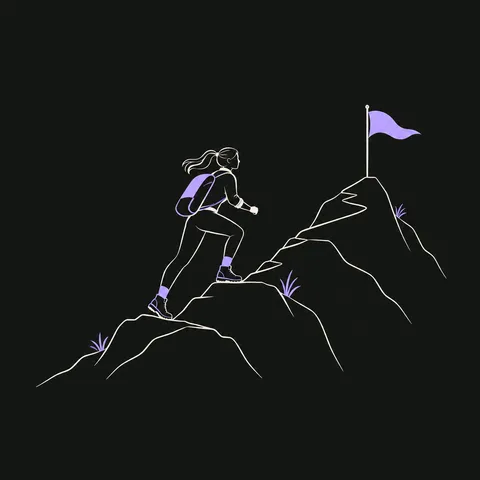
Drivers are direct, decisive and focused on results. They like clear goals, quick decisions and the freedom to choose how a job gets done, and they tend to say exactly what they think. At their best they cut through hesitation, take responsibility when things go wrong and push a team past obstacles others would accept. Under pressure they can turn impatient, overrule people and treat questions as delays. Growth often comes from slowing down long enough to listen and bring others along.

Influence: The Connector
Connectors are outgoing, enthusiastic and persuasive. They make friends quickly, think out loud and can get a room excited about a plan. At their best they build networks, lift morale, ease tension with humor and help good ideas spread. Under pressure they may overpromise, skip details, talk their way around a problem or take criticism personally. Growth often comes from pairing their energy with follow-through: writing things down, finishing what they start and letting the numbers speak alongside the story.
Steadiness: The Anchor
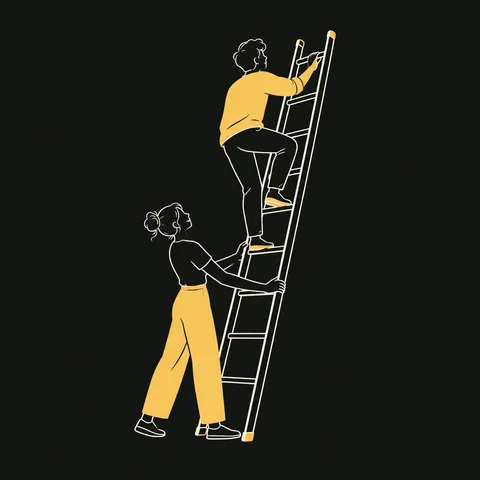
Anchors are patient, loyal and supportive. They listen closely, keep their word and like a steady pace with clear expectations. At their best they hold a team together, calm tense moments and do reliable work that others quietly depend on. Under pressure they may go along with decisions they disagree with, resist sudden change and keep frustration to themselves until it builds. Growth often comes from saying no sooner, voicing disagreement early and trusting that change can be handled one step at a time.
Conscientiousness: The Analyst
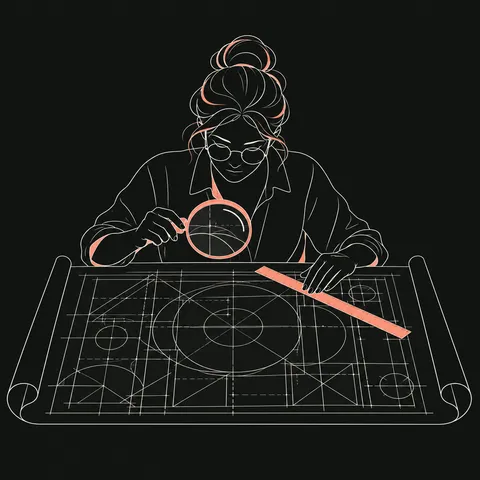
Analysts are careful, logical and committed to quality. They want facts before opinions, plans before action and work done right the first time. At their best they spot errors others miss, build systems that hold up and give advice people can trust. Under pressure they may overanalyze, delay decisions while waiting for certainty or grow critical of work that falls short. Growth often comes from deciding when good enough really is enough, and from sharing their reasoning in plain, warm terms.
DISC Personality Test: frequently asked questions
Is this DISC personality test free?
Yes. It is completely free, with no account, email or sign-up. Your answers are scored in your browser and never leave it, so nobody else sees how you responded. You can retake the test whenever you like and compare your results over time.
How long does the DISC personality test take?
The test has 32 statements, and most people finish in about five minutes. Go with your first honest reaction rather than weighing each statement for long. Overthinking tends to pull your answers toward how you believe you should behave at work, rather than how you actually do.
What does a blend like DI or SC mean?
A blend means your top two styles scored close together. A DI tends to be fast, direct and persuasive; an SC tends to be careful, patient and reliable. Read both descriptions, start with the higher one, and treat the second letter as a strong flavor rather than a separate type.
Is this an official DISC assessment?
No. This is an independent test with original statements written for this site, based on the four styles William Moulton Marston described in 1928. It is not affiliated with Everything DiSC®, a trademark of John Wiley & Sons, or with any other commercial DISC profile, and its scores are not comparable with theirs.
How accurate is the DISC personality test?
This is a free self-report test for self-reflection, not a clinical, diagnostic or hiring instrument, so please don't use it to screen job candidates. It reflects how you see your own behavior today. Scores can shift a few points between sittings, especially when two styles are close, so read your result as a useful sketch rather than a verdict.
Can my DISC style change over time?
Your scores can move, and many people behave differently at work than at home: a manager may lean D at the office and S with family. A new role or life stage can shift the balance too. If your result surprises you, retake the DISC personality test with one setting in mind and compare.
Is any DISC style better than the others?
No. Every style brings strengths a team needs and blind spots it has to manage. Dominance gets things moving, Influence brings people along, Steadiness keeps things stable and Conscientiousness keeps quality high. Strong teams usually mix styles, and good leaders come from all four.
Should I answer for work or for life in general?
Answer the DISC personality test as you usually are across most of your life. If a statement fits you at work but not at home, pick the answer that is true most of the time. If you mainly want a work profile, it is fine to keep your job in mind for every statement, as long as you do so consistently.
What do I get when I finish the DISC personality test?
You get a free result page with your score on each of the four styles, your primary style, a short description of it and an image you can share. If you want more depth, a detailed PDF report is available for your result, covering your style at work, in relationships and under stress.
More free tests
- Big Five50 statements · about 7 min
- 16 Types48 statements · about 7 min
- Enneagram54 statements · about 8 min
- HEXACO60 statements · about 9 min
- Dark Triad27 statements · about 4 min
- Introvert or extrovert24 statements · about 3 min
- Attachment style32 statements · about 5 min
- Love language30 statements · about 4 min
- Love styles30 statements · about 4 min
- Locus of control24 statements · about 3 min
- Reaction timePlays in your browser · about 1 min
- Typing testPlays in your browser · about 1 min
- Number memoryPlays in your browser · about 1 min
- Verbal memoryPlays in your browser · about 1 min
- Sequence memoryPlays in your browser · about 1 min
- Visual memoryPlays in your browser · about 1 min
- Chimp testPlays in your browser · about 1 min
- Aim trainerPlays in your browser · about 1 min
- 12 Axes36–288 statements · 12 axes · about 5–40 min
Statements: Original items written for this site, based on William Moulton Marston's four DISC styles (1928), © 12axestest.dev.
DISC Personality Test: Which of the Four Styles Is Yours?
Start the DISC personality test